

Understanding the Benefits of CMYK Printing
- cmyk graphics
- Oct 6, 2025
- 4 min read

When it comes to printing, the CMYK color process plays a crucial role in producing vibrant and accurate colors on paper. This method is widely used in the printing industry for everything from brochures and posters to packaging and magazines. Understanding how the CMYK color process works and its benefits can help you make better decisions for your printing needs.
What is the CMYK Color Process?
The CMYK color process is a subtractive color model used in color printing. It stands for Cyan, Magenta, Yellow, and Key (Black). These four ink colors are combined in various ways to create a wide range of colors on printed materials.
Cyan, Magenta, and Yellow are the primary colors in this model.
Black (Key) is added to enhance depth and detail, as mixing the three primary colors alone cannot produce a true black.
The process works by layering these inks in different proportions. When light reflects off the printed surface, the inks absorb certain wavelengths, producing the colors we see.
This method is essential for producing high-quality prints with accurate color reproduction. It is especially effective for materials that require precise color matching, such as brand logos and product packaging.

Close-up view of CMYK ink droplets on paper
How the CMYK Color Process Enhances Print Quality
The CMYK color process offers several advantages that improve the overall quality of printed materials. Here are some key benefits:
1. Accurate Color Reproduction
Because CMYK uses four separate ink colors, it can reproduce a wide spectrum of colors with great accuracy. This is particularly important for businesses that need to maintain consistent brand colors across different print runs.
2. Cost-Effective for Large Runs
Using CMYK inks is generally more affordable for large print jobs compared to other color printing methods. The process is standardized, which means printers can produce consistent results efficiently.
3. Versatility Across Materials
The CMYK process works well on various paper types and finishes, including matte, glossy, and textured surfaces. This versatility allows for creative freedom in designing printed materials.
4. Better Detail and Contrast
Adding black ink (Key) improves the sharpness and contrast of images. This is especially useful for text and fine details, ensuring that printed materials are clear and easy to read.
5. Environmentally Friendly Options
Many modern CMYK inks are formulated to be eco-friendly, using soy or vegetable-based components. This reduces the environmental impact of printing without compromising quality.

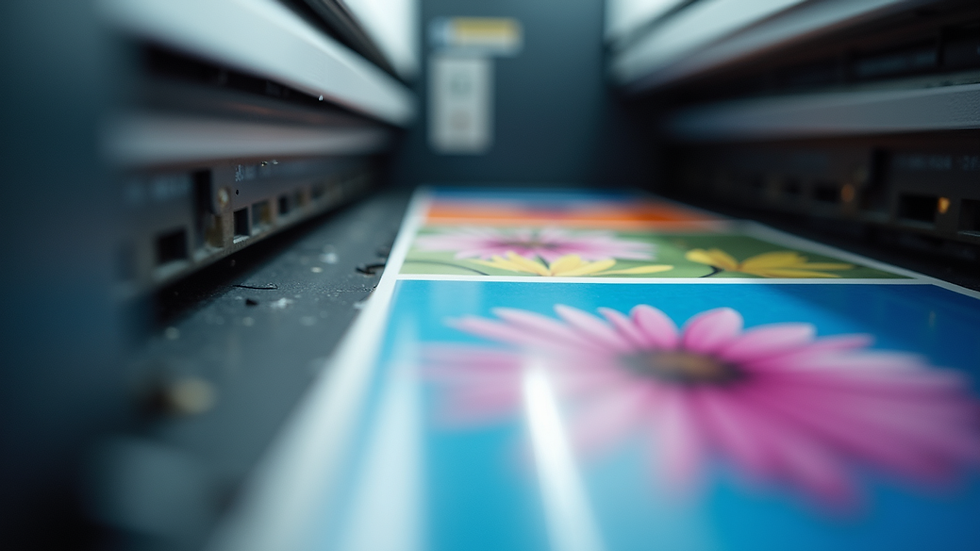
Eye-level view of a printing press producing colorful brochures
Is RGB or CMYK Better for Print?
Understanding the difference between RGB and CMYK is essential when preparing files for printing.
RGB (Red, Green, Blue) is an additive color model used for digital screens like monitors, TVs, and smartphones. Colors are created by combining light.
CMYK is subtractive and used for physical printing, where inks absorb light.
Why CMYK is Preferred for Print
RGB colors often appear brighter on screens but cannot be accurately replicated in print.
Converting RGB files to CMYK before printing ensures colors are within the printable range.
Some RGB colors, especially bright neon shades, cannot be produced with CMYK inks.
Professional printers require files in CMYK format to avoid unexpected color shifts.
Practical Tips
Always design with CMYK color profiles if the final output is print.
Use software like Adobe Photoshop or Illustrator to convert RGB files to CMYK.
Request a printed proof to check color accuracy before mass printing.

High angle view of a designer working on color calibration for print
Practical Applications of CMYK Printing
The CMYK color process is used in many industries and applications. Here are some examples:
Marketing Materials
Brochures, flyers, posters, and business cards rely on CMYK printing to deliver vibrant and consistent colors that attract customers.
Packaging
Product packaging often requires precise color matching to maintain brand identity. CMYK printing ensures logos and designs look professional and appealing.
Magazines and Books
High-quality images and text clarity are essential in magazines and books. CMYK printing provides the detail and color depth needed for these publications.
Custom Merchandise
From labels to promotional items, CMYK printing allows for customization with accurate colors and sharp details.
Recommendations for Best Results
Use high-resolution images (300 dpi or higher) for printing.
Choose paper types that complement your design and ink absorption.
Work with experienced printers who understand color management.
Exploring the Advantages of cmyk printing
If you want to see the benefits of CMYK printing in action, exploring real-world projects can be very insightful. The cmyk printing process allows for side-by-side comparisons of different printing techniques and color outputs.
By reviewing these examples, you can better understand how CMYK printing enhances color accuracy, detail, and overall print quality. This knowledge can help you make informed decisions when selecting printing services or preparing your own print files.
Final Thoughts on the CMYK Color Process
The CMYK color process remains the backbone of professional printing. Its ability to produce accurate, vibrant colors and sharp details makes it indispensable for a wide range of printed materials. Whether you are creating marketing collateral, packaging, or publications, understanding how CMYK works can help you achieve the best possible results.
By choosing the right materials, preparing your files correctly, and working with skilled printers, you can leverage the full potential of the CMYK color process to bring your designs to life.


Comments